For PCOS — renamed PMOS in 2026
Facet is the PCOS tracker for cycles that don't behave. Your own ranges instead of a made-up period date. A meal photo read back without a single calorie. And insights that wait until a pattern is really there.
iPhone & Apple Watch · No account, ever · No calories, ever


It's day 41. Your period app has said “13 days late” for three weeks.
Your food app graded lunch a C. Your doctor said come back when you want kids. None of it is about you — it's about an average woman with a 28-day cycle who wants to lose fifteen pounds, and you've been reading your own body through her data for years.
Thirty-four days, then fifty-one, then nothing for two months — and a red dot on the wrong day every time.
Sometimes for years. Sometimes at 110 lb. Meanwhile the skin, the hair, the exhaustion go unaddressed.
Supplements, labs, appointments. You don't need more advice — you need evidence about your own body.
Every day, in two minutes
The daily loop is small on purpose — the point is that it survives a bad week.
Two minutes a day, no diary
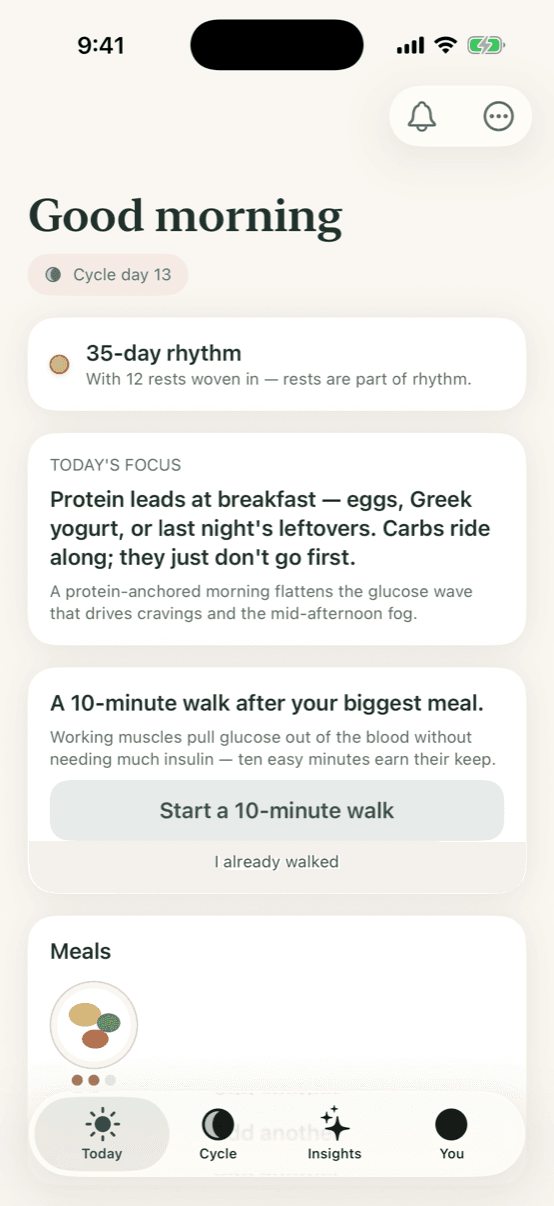
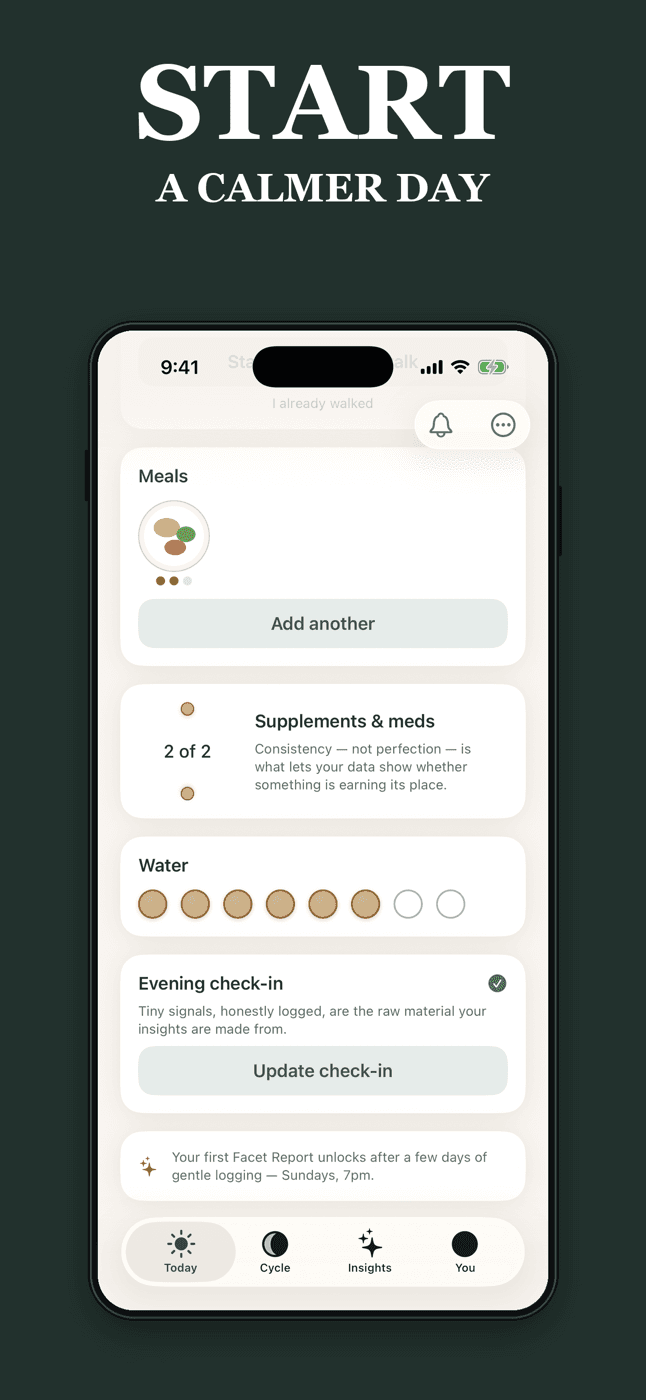
Today shows your cycle day, one focus, your supplement ring, a post-meal walk you can start in one tap, and water. Miss a few days and Facet calls them rests, because they are. No red X anywhere in this app, and no streak that punishes a hard week.

Food, without the arithmetic
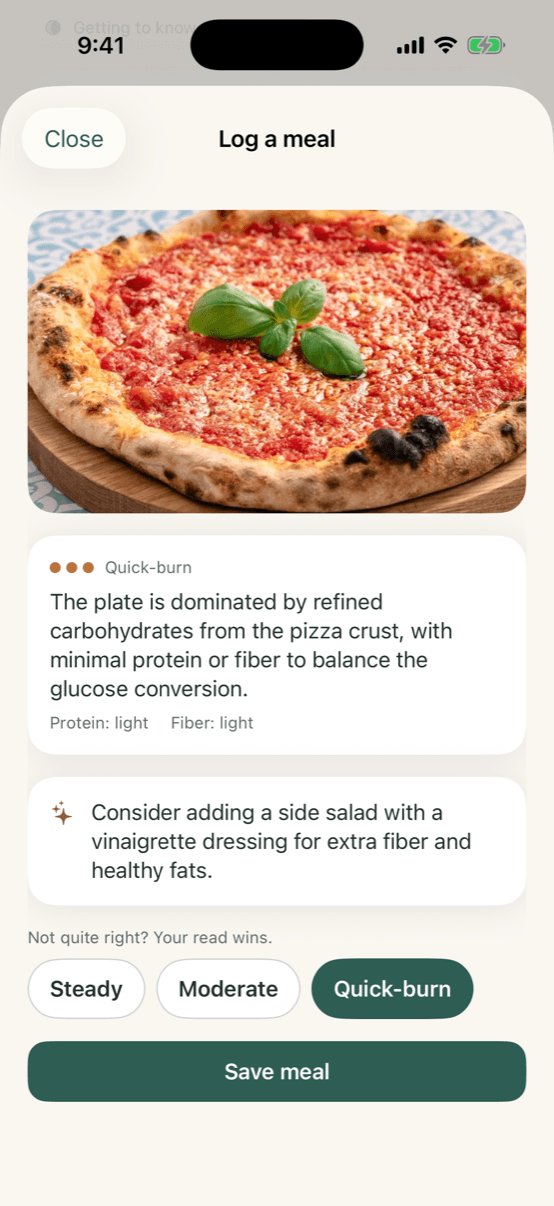
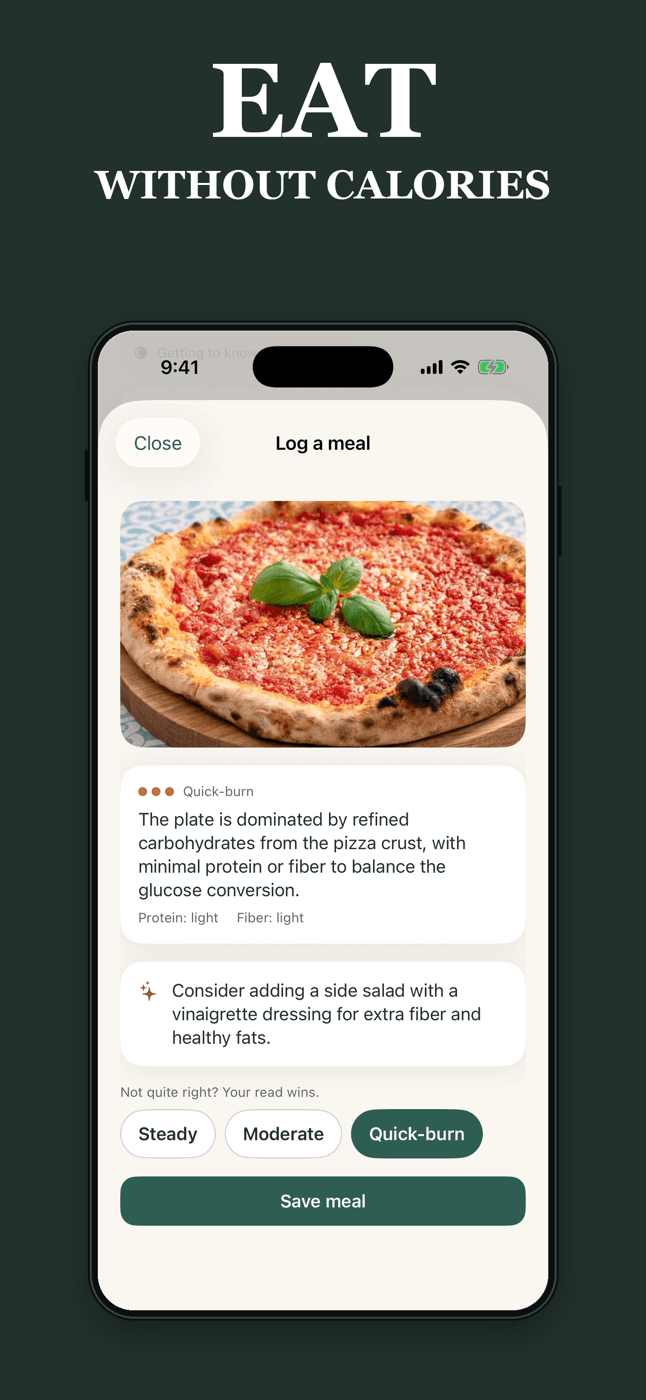
A meal photo comes back in about three seconds: Steady, Moderate or Quick-burn, one plain sentence on what drives that, and one thing to add. No calories. No grams, no macros, no glycemic-index scores, no A-to-F grade. If the read looks wrong, your correction wins in one tap.

Irregular-first, not irregular-tolerant
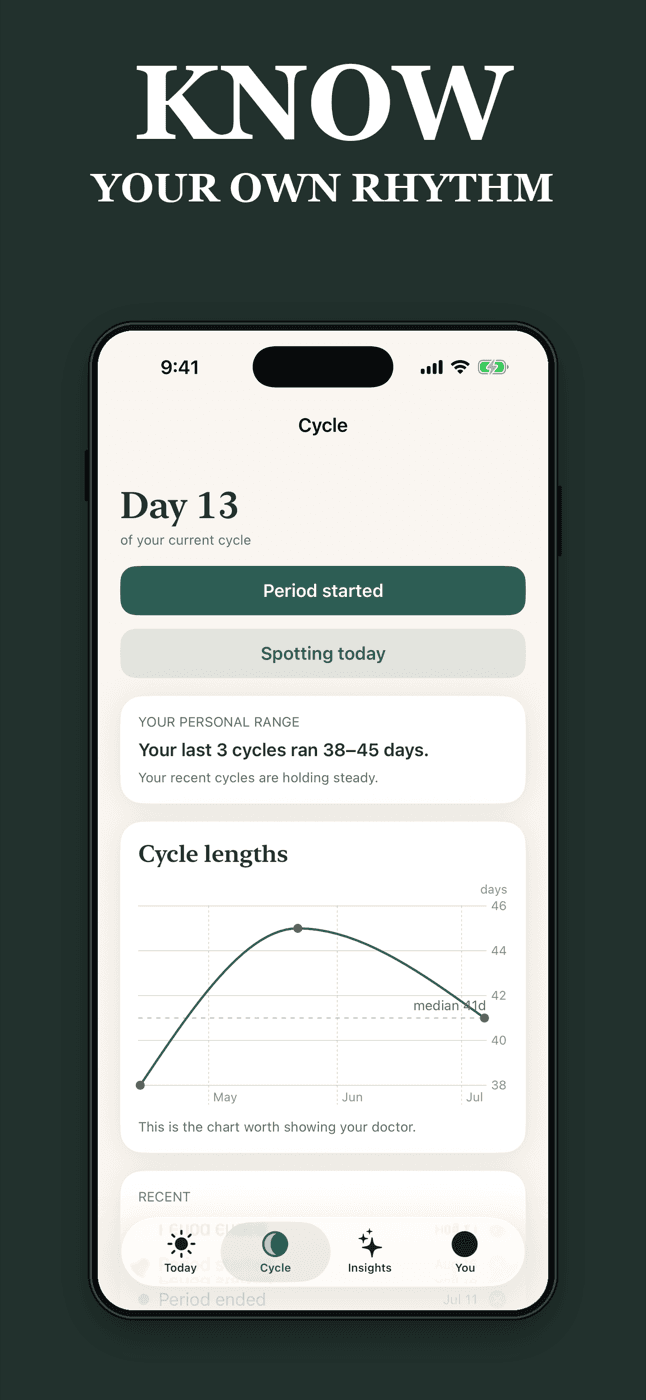
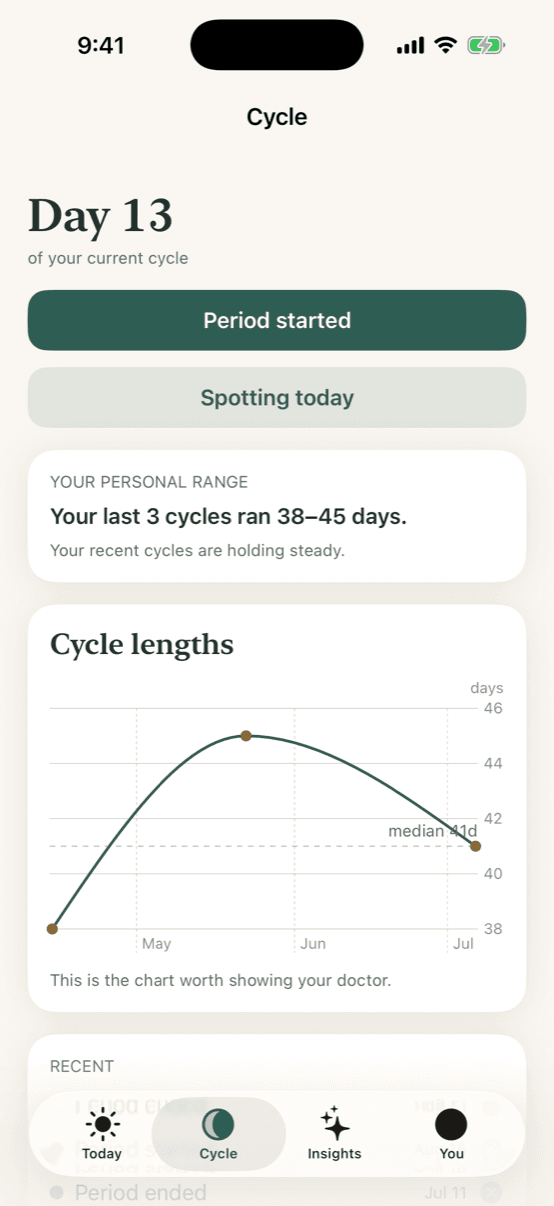
No invented period date. Facet shows the day you're on, the band your recent cycles actually ran in — "your last 3 cycles ran 38–45 days" — and a cycle-length trend over time. When the data is too thin to say something honest, it says nothing instead of guessing.

May 2026
PCOS is now PMOS — polyendocrine metabolic ovarian syndrome. Same diagnosis, same body, a name that finally admits the condition is metabolic, dermatological and psychological as much as it is reproductive. Facet was built for the new one.
Then zoom out
The part no spreadsheet and no memory can do for you — and the part you can hand to a doctor.
Insights that admit what they don't know
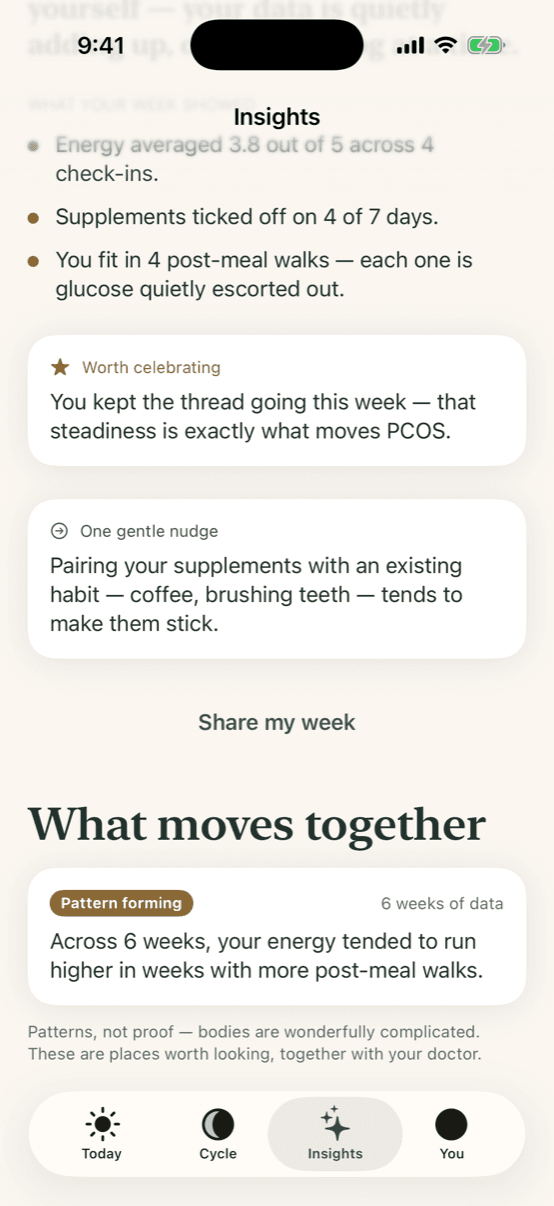
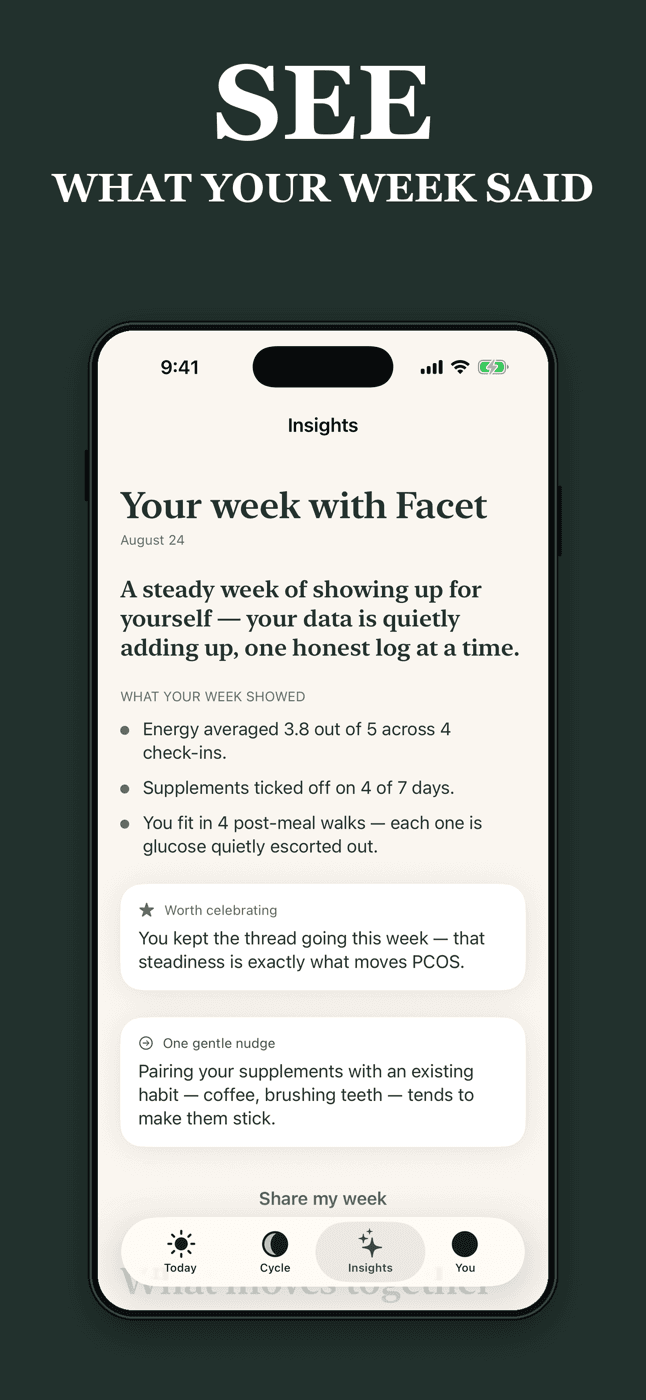
Facet looks for links between what you do and how you feel, then labels how sure it is: "Pattern forming — 6 weeks of data", not a confident headline built on nine days. Every card carries the same footnote — patterns, not proof.

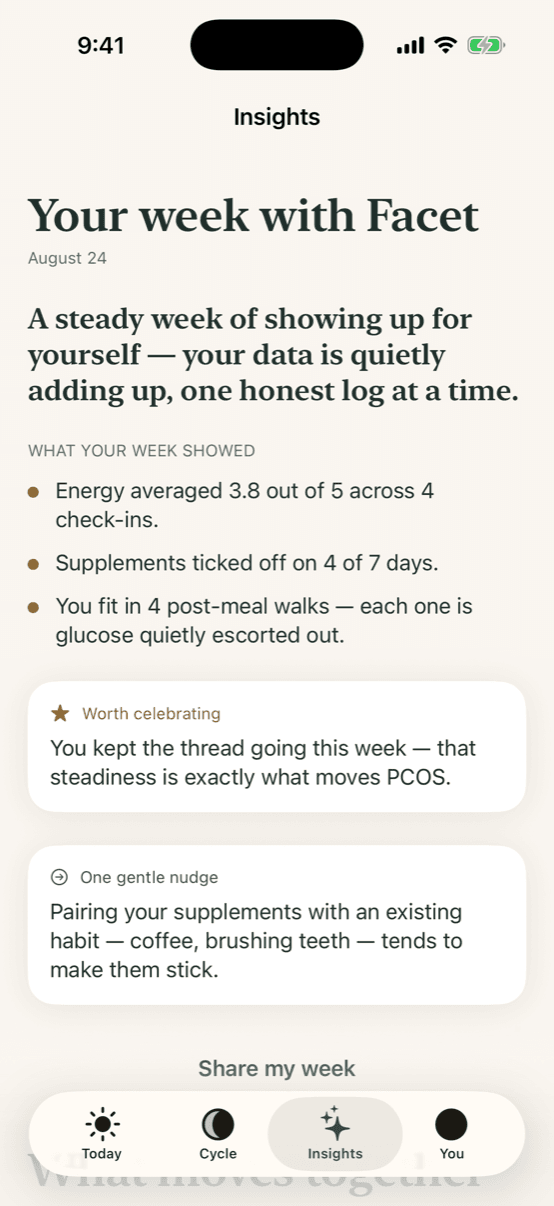
One quiet page a week
Sundays, in serif, at a human length: a few observations from your own week, one gentle nudge, and one thing worth celebrating. Shareable as an elegant card that carries no numbers you didn't choose to share.

For the ten minutes you actually get
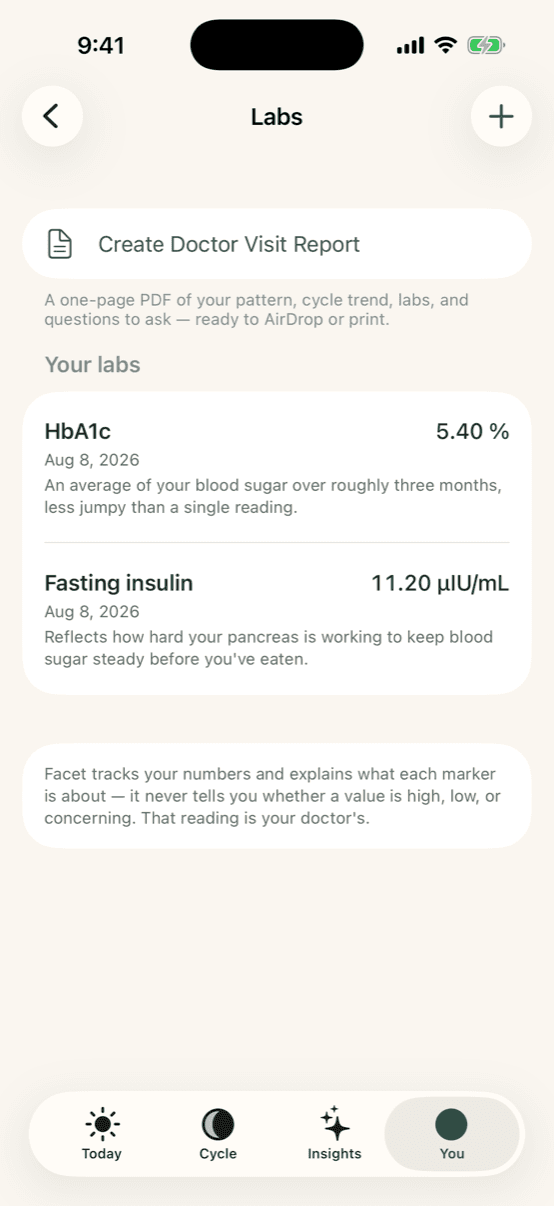
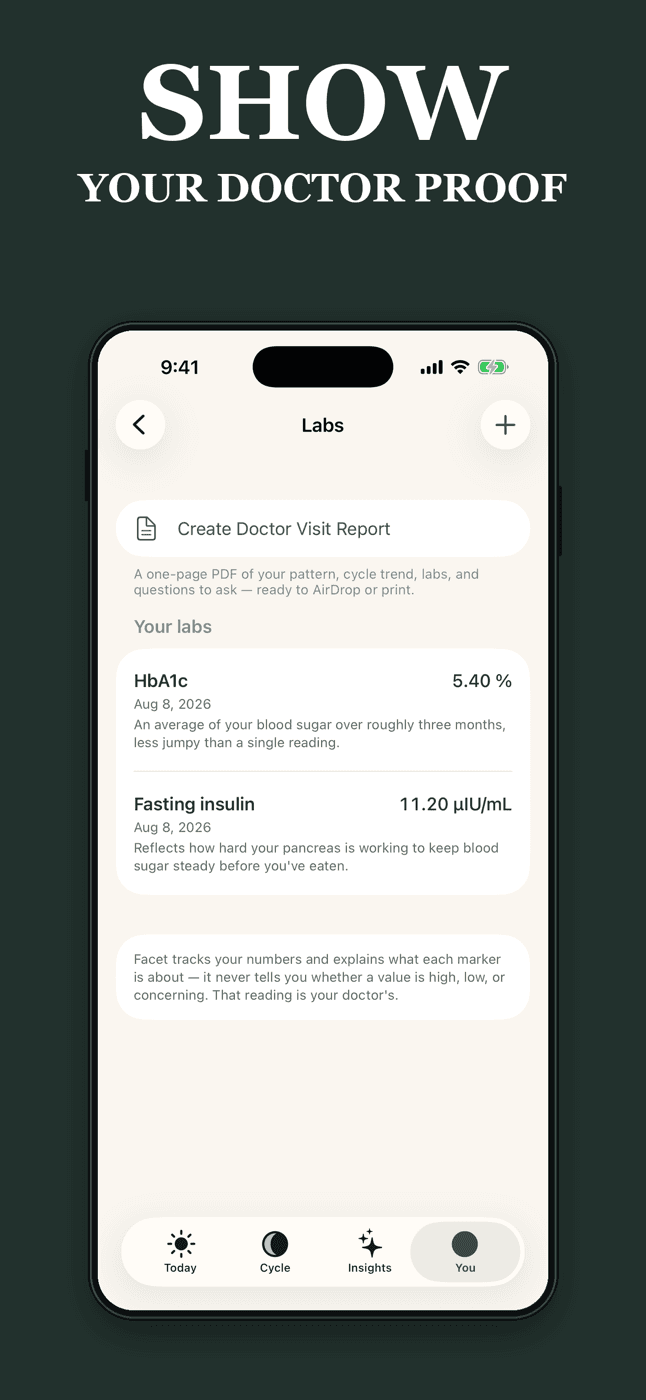
Keep your labs — HbA1c, fasting insulin, testosterone, AMH — each with a plain-English line on what the marker is about. Then export a one-page Doctor Visit Report: pattern, cycle trend, labs, and the questions worth asking. Facet never says a value is high, low or concerning. That reading is your doctor's.

iPhone, Apple Watch, widgets, Siri
Everything you log daily is three taps from opening the app — and most of it never needs the app at all.
Tick off supplements, run the post-meal walk timer with a warm double-tap at the end, and log how you feel — without unlocking your phone.
Your supplement ring and cycle day where you already look. One tap into a log, no app launch, no hunting for a button.
"Log my supplements." "Start a post-meal walk." The two things you'll do most, without touching the screen.
Facet reads the cycles, steps, sleep and workouts you already have, so your first chart isn't empty on day one.
Every screen, one story


Private by design, not by policy
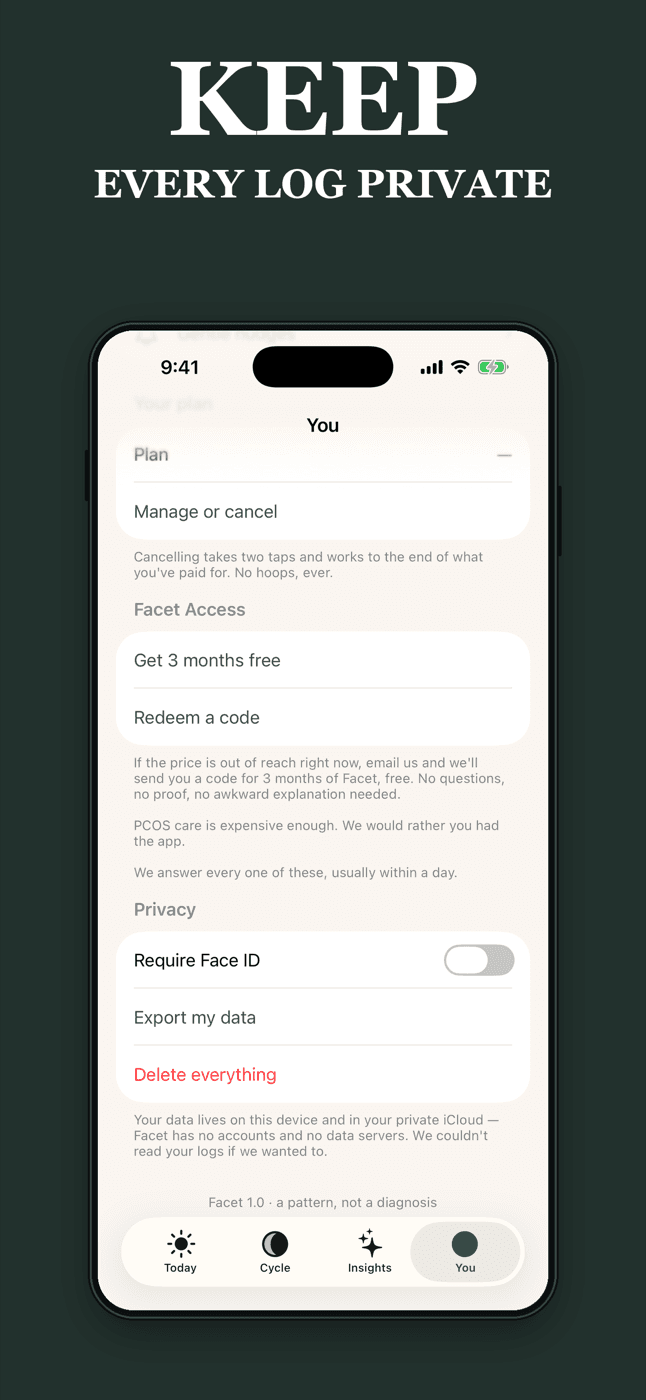
Reproductive health data is not something to hold loosely. So Facet doesn't hold it at all — there is no account and no server of ours with your name on it.
No email, no password, no profile to be locked out of. Your identity is your iPhone. That's the whole login.
Everything lives on your device and in your own private iCloud. Nothing on our side to breach, sell or be compelled to hand over.
Lock the app behind Face ID. Export everything whenever you want. Delete all of it permanently, from inside the app.
A downscaled photo of your plate and a little coarse context — never your name, your cycle history or anything identifying. Nothing is stored.
Read the whole thing in the privacy policy. It's short, because there isn't much to disclose.
Pricing you can read in one go
This category has a billing-surprise problem, and we'd rather be boring about money than clever about it.
Yearly
Most popular$39.99
for your first year — about $3.33 a month
Renews at $69.99/year on the same date next year, unless you cancel. That second number is printed above the purchase button in the app too.
Monthly
$14.99
per month
Month to month, cancel whenever. No weekly plan exists and none ever will — that's the pricing shape this category uses to squeeze people, and we're not doing it.
Lifetime
$199.99
once
One payment, every feature, no renewal to think about again. Most people shouldn't buy this one — it only makes sense if you know you're in for years.
Facet Access
Email us and we'll send a code. No questions, no proof of anything, no awkward explanation — you email, we reply, usually within a day. PCOS care is expensive enough without this app being one more line item, and a lot of the people who need it most are teenagers and uninsured. We'd rather you had it.
access@facetpcos.xyzBilled by Apple, cancel in two taps from your own iPhone settings.
Your renewal date and both prices in plain text before you pay.
Free either way: the quiz and your pattern readout.
Questions
In May 2026 a Lancet and Endocrine Society consensus renamed polycystic ovary syndrome to PMOS, polyendocrine metabolic ovarian syndrome. Nothing about your body changed. The name did, because the old one described a single ultrasound finding while the condition itself is endocrine, metabolic, reproductive, dermatological and psychological all at once — and because plenty of people diagnosed with it never had cysts at all. Facet uses both terms: PCOS is still what almost everyone searches for and says out loud, and PMOS is what the paperwork is moving to.
That is the case Facet was designed around, not an edge case it tolerates. It never shows you a single predicted period date. It shows the day you're on, the range your own recent cycles ran in, and how that range is trending. If you've had two cycles in a year, Facet will tell you it doesn't have enough to say — which is the honest answer, and one no confident red dot on a calendar can give you.
No. There is no calorie count anywhere in Facet, no macro targets, no weight-loss programme and no goal you have to opt out of. Meal feedback is Steady, Moderate or Quick-burn with one thing to add — never a grade and never something to cut. Lean PCOS is common and almost entirely unserved by this category, and the food guidance here works the same whatever your body is doing.
No, and deliberately so. The onboarding quiz gives you a pattern, never a diagnosis, and it says so on the card. Facet won't recommend supplement doses, won't tell you whether a lab value is high or low, and won't answer drug-interaction questions — it hands you a summary of your stack to take to your doctor or pharmacist instead. It is lifestyle education that helps you ask better questions in a ten-minute appointment.
$39.99 for your first year, then $69.99 a year after that. Monthly is $14.99. There's also a one-time $199.99 lifetime option if you'd rather never think about it again. There is no weekly plan and there never will be — weekly billing is the single most complained-about thing in this category and we'd rather earn less than run it.
Then email access@facetpcos.xyz and we'll send you a code for three months of Facet, free. No questions, no proof, no awkward explanation. PCOS care is expensive enough — supplements, labs, appointments — and we'd rather you had the app. It's called Facet Access and it's a normal, visible part of the product, not a favour.
Through Apple, in two taps, the same way you cancel anything else on your iPhone — and Facet links you straight to that screen from its own settings. Your renewal date and both prices are printed in plain text above the purchase button before you ever pay. Access runs to the end of the period you've already paid for.
Not at launch, because Apple allows one introductory offer per subscriber and we spent ours on the discounted first year instead. What is free: the onboarding quiz and your pattern readout, which is the part most people screenshot. And if money is the obstacle, Facet Access exists precisely for that.
No, and Facet is built so you won't feel pushed to. Meal photos are never streaked, never counted and never nagged about — there's no "you missed a meal," no completeness meter, no daily total. PCOS carries roughly triple the eating-disorder risk, so the habit the app actually asks for is ticking off your supplements and a twenty-second check-in. Photograph a plate when you're curious about it.
It can, and for irregular cycles it's better at the job. If you'd rather keep logging periods where you already do, Facet reads your cycle history from Apple Health instead.
No — Facet is a complete iPhone app. If you have a Watch, you get supplement check-off, the post-meal walk timer with haptics, a quick feel log and a cycle-day complication on your wrist.
You can track through it, and the cycle trend and labs are genuinely useful to bring to a fertility appointment. But Facet's cycle estimates are ranges for planning your days, never a fertile window — do not use this or any app as contraception or for family planning.
Still wondering something? Support is one email away — or read more on the blog.
You've been carrying years of symptoms, supplements and half-answers in your head. Put them somewhere calm that can actually read them back.
$39.99 for your first year, then $69.99 a year. Monthly $14.99. Cancel any time in your Apple account settings.